Motion Design Costs in 2026: How Much Do Animation and Motion Graphics Cost?
From a logo animation for 500 euros to a broadcast campaign: realistic prices, hourly rates, and the factors behind them.
Reading time: 9 minutes | Updated: July 2026
Motion design is everywhere: the animated logo in a video intro, the infographic in an annual report video, the loop playing at a trade show booth, and the social media animation in a feed. The price range is correspondingly wide—and budgeting is correspondingly difficult when quotes range from 500 to 50,000 euros.
We’ve been creating motion graphics for large corporations and small and medium-sized businesses for over 15 years—from the corporate identity manual video for Bosch to the motion graphics for TÜV Rheinland. Here is our transparent pricing overview for 2026.
The short answer: This is how much motion design will cost in 2026
In 2026, motion design costs between 60 and 150 euros per hour in the DACH region —in terms of project pricing, this means: logo animations starting at 500 euros, social media animation packages ranging from 1,500 to 4,000 euros, and a 60-second animated video with concept and voiceover costing between 3,000 and 8,000 euros. For longer productions, the cost is typically 2,000 to 3,000 euros per minute of animation. Complex 3D animations and broadcast campaigns run into the five-figure range.
Motion Design Costs by Use Case: The Price Table
Instead of abstract per-minute rates: What typical motion design projects will cost in 2026:
| Use Case | Budget | Typical Scope |
|---|---|---|
| Logo Animation / Intro-Outro | 500–1,500 € | 3–10 seconds, sound design included |
| Social Media Animation Package | €1,500–4,000 | 5–10 short animations in various formats, template system for your own team |
| Animated video, 60–90 seconds | 3,000–8,000 € | Concept, storyboards, animation, voice-over, music — see “Explanatory Video” |
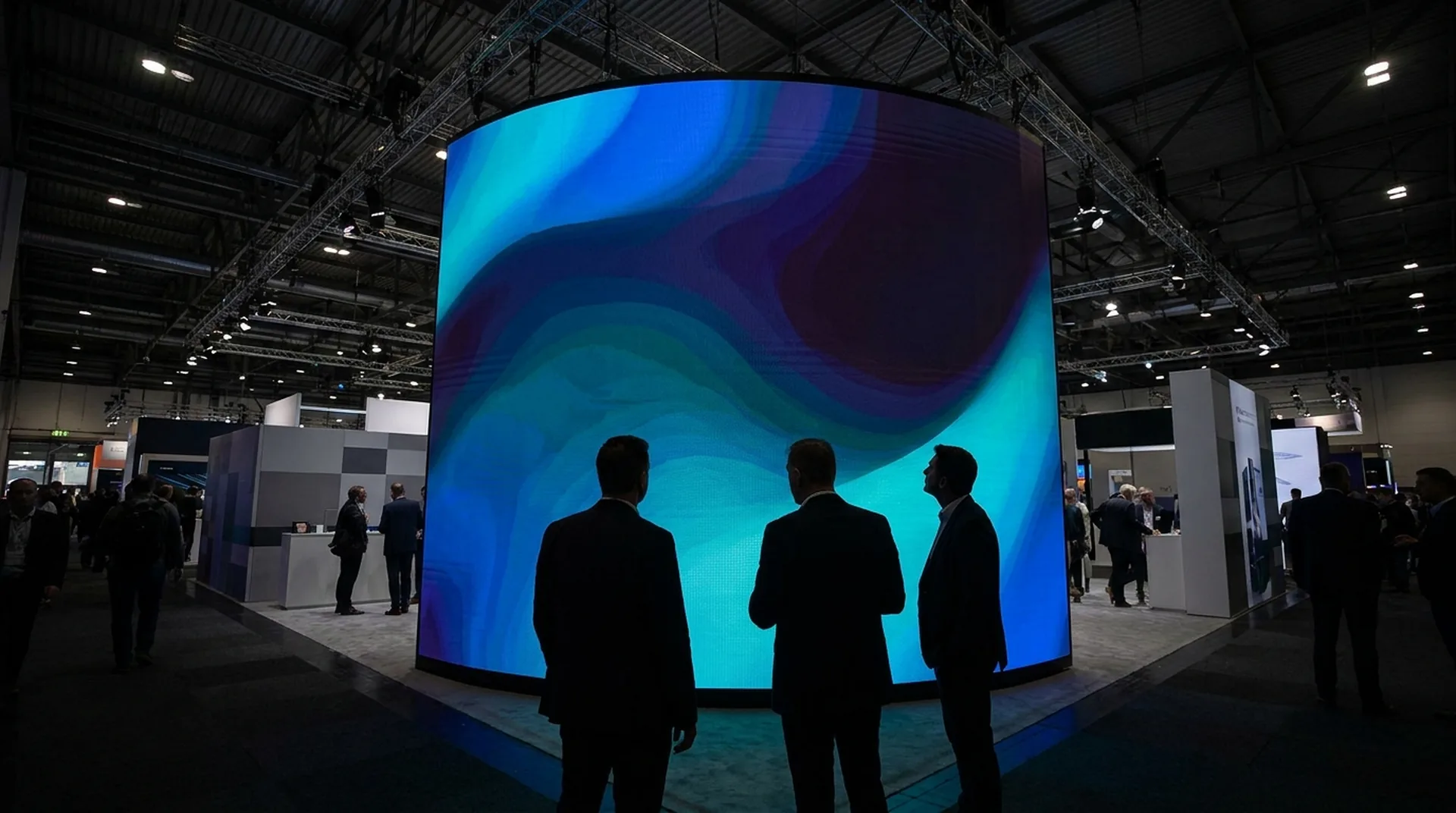
| Trade Show Loop / Event Screens | €2,000–6,000 | Loop-capable animations for LED walls and columns, optimized for resolution |
| Animated Corporate Design | €5,000–15,000 | Motion system for the brand: logo, typography, transitions, templates, guidelines |
| Broadcast / Campaign Graphics | 10,000+ € | TV-ready graphic packages, complex composites, 3D elements |
All prices are net and are approximate.
Hourly rate or project price?
Freelance motion designers typically charge 60 to 150 euros per hour, while studios and agencies charge 90 to 150 euros. For clearly defined projects, we recommend fixed prices: you know what you’re paying, and the service provider bears the efficiency risk. Hourly rates are fair for open-ended, iterative tasks—such as ongoing social media management or design systems that evolve with you. Reputable quotes for both models clearly outline what’s included: concept, style frames, animation phase, revisions, and format variations.
The 5 Cost Factors in Motion Design
1. Complexity of the animation
A text that flies in elegantly takes an hour of work. A character that walks, talks, and interacts is a week-long project. Frame-by-frame animation, character rigging, and physics simulations are the most expensive disciplines—simple keyframe animation of shapes and text is the least expensive.
2. Illustrations and Style Frames
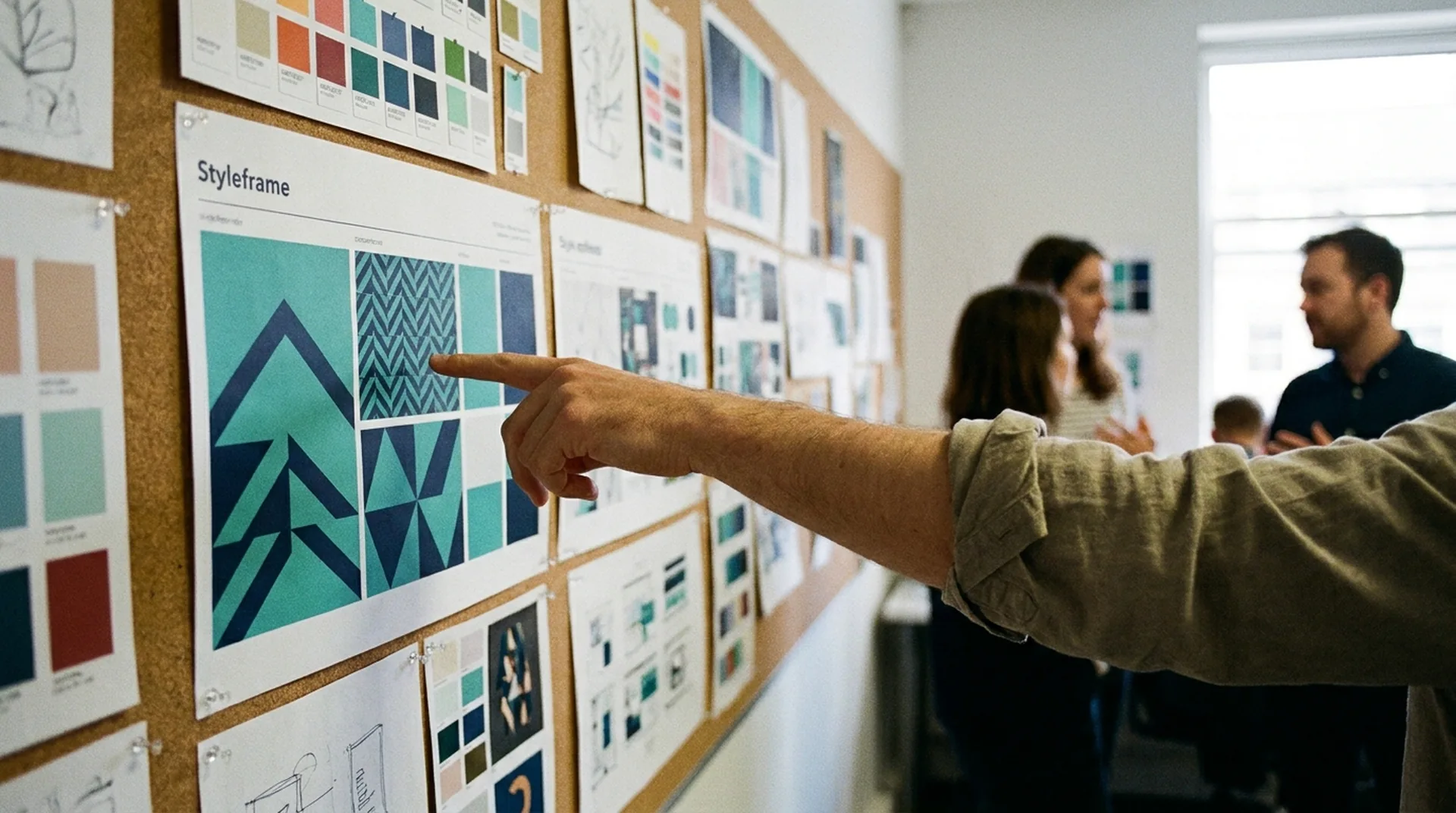
Before anything moves, it has to be designed. Custom illustrations and well-developed style frames make the look unique—and account for a significant portion of the budget. If you can provide existing design assets (icons, illustrations, CI elements), you’ll save a lot of money here.
Stock image, AI-generated
3. Length and Format Options
For longer productions, each minute of animation costs between 2,000 and 3,000 euros—shorter pieces are more expensive per minute because the concept and setup are fixed costs. Different aspect ratios (16:9, 9:16, 1:1, 4:5) require adjustments to composition and timing, not just cropping.
4. Sound Design and Soundtrack
Motion design without sound is only half the story. Music licensing, sound effects for every movement, and, if necessary, voice-over talent account for 10–20% of the budget—and should be included in any professional proposal.
5. Corrections and Source Files
Two rounds of revisions are standard. Important for the future: Make sure to clarify whether you’ll receive the source project files (After Effects, Cinema 4D)—so your team or other service providers can make adjustments later. This usually costs a little extra, but it saves money in the long run.
Motion Design, Animation, Explainer Video: What’s the Difference?
Motion design is the umbrella term: design in motion—from logo animations to infographics. An explainer video is one such application, with its own narrative structure and voice-over script; you can find the prices for these in our explainer video cost guide. 3D animation is a step up in terms of technology, with its own pricing structure. And in advertising films, motion design is usually a key component: titles, on-screen text, product graphics, and data visualization.
Dynamic Corporate Design: The Underestimated Lever
In 2026, brands will come to life on screens—and static style guides will no longer suffice. An animated corporate design defines how your brand moves: logo behavior, typography transitions, transitions, and loop behavior. Once set up as a system, it makes every future production project more cost-effective and consistent—your team works with ready-made templates instead of individual assignments.
Stock image, AI-generated
Real-world example: For Bosch, we produced the CI manual as a video—presenting design guidelines not as a PDF, but as moving images that bring the brand to life. This approach is exactly what any medium-sized business that regularly produces video content should adopt.
Freelancer or Studio?
A good freelancer is often the most cost-effective choice for individual, clearly defined tasks. A studio is worth considering if you want concept, design, and sound all from a single source, if reliability is key over the course of several months, or if motion design is part of a larger film production. My honest advice: What matters isn’t the company name, but the quality of the portfolio and whether the provider is willing to understand your brand—or is just setting keyframes.
Here’s How a Motion Design Project Works
- Week 1 — Briefing & Concept: Goal, channel, message, existing design assets.
- Week 2 — Style Frames: The Look as Still Images — Your Most Important Approval.
- Weeks 3–4 — Animation: Movement, Timing, Transitions.
- Weeks 4–5 — Sound & Finishing: Sound design, music, corrections, format variations, delivery.
Hidden costs you should know about
- Font Licenses — Your corporate font may require a video/broadcast license
- Stock assets — Illustrations or footage from libraries are billed per license
- Format Variations — Every Aspect Ratio Is a Composition
- Open-ended project files — usually at an additional cost, but worthwhile in the long run
- Data Updates — Numbers in animated infographics change; clarify update conditions in advance
Frequently Asked Questions About Motion Design Costs
How much does one minute of animation cost?
For longer productions, 2,000 to 3,000 euros per minute. Short pieces are more expensive per minute because the concept and design are fixed costs that are spread over a shorter runtime.
How much does a logo animation cost?
500 to 1,500 euros, including sound design—depending on whether the logo needs to be deconstructed and rebuilt or if a simple fade-in is sufficient.
What is the standard hourly rate?
60 to 150 euros in the DACH region, depending on experience and specialization. Significantly lower prices usually mean work based on templates rather than custom design.
What is the difference between motion design and an explainer video?
Motion design is the discipline; an explainer video is a product of that discipline. An explainer video also requires a script, storytelling, and a voice-over artist—which is why it costs more than a purely animated video of the same length.
How long does a motion design project take?
Logo animations: 1–2 weeks. Animated videos: 4–6 weeks. Animated design systems: 6–10 weeks. The biggest time-consuming factor is the approval process.
Can we have existing illustrations animated?
Yes—that saves on illustration costs. Prerequisite: The files must be in layered format (AI, PSD, SVG). Flat JPGs must first be broken down or recreated.
Conclusion: Think in terms of systems, not individual components
In 2026, motion design will cost anywhere from 500 euros for a logo animation to five-figure sums for campaign graphics. The wisest investment is in reusable systems: templates, animated brand identity elements, and formatting rules. This reduces the cost of every subsequent production.
You can find an overview of all our services here—from motion graphics and explainer videos to full-scale film production.
This guide is part of our comprehensive price overview—you can find all video types and price ranges at a glance in our pillar article, “Video Production Costs 2026: A Complete Price Overview.”
Do you want your brand to be dynamic?
Free Initial Consultation — We’ll use your existing design assets to show you what’s possible and how much it will cost.